


Costa Rica
Costa Rica combines strong tobacco control legislation with universal health coverage, but its COPD response is hindered by extremely high underdiagnosis, limited access to spirometry and specialist care, and the absence of a unified national strategy or clinical guidelines. Growing environmental risks, suboptimal treatment patterns, and urban–rural disparities further undermine disease management and outcomes.

Policy Context
78

Access and Care Coverage
60

Health System Characteristics
53

Disease Burden
82

Environment
73
Index Score
69
/100
Rank
6
/45
Overview
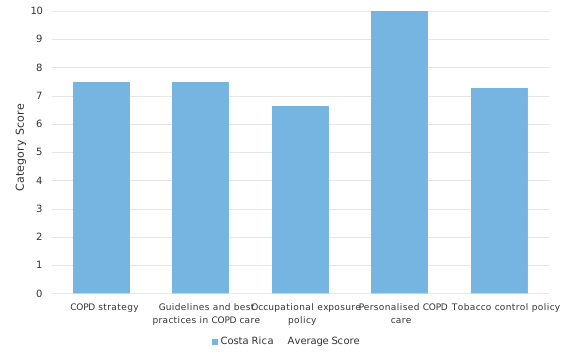
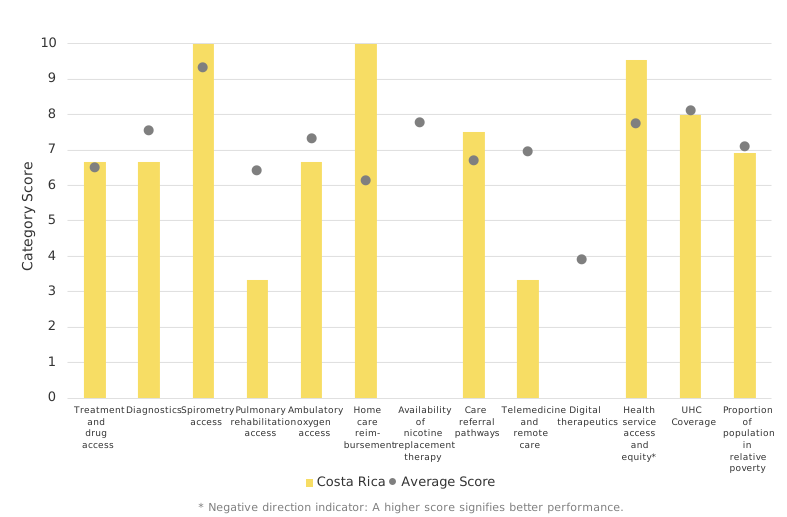
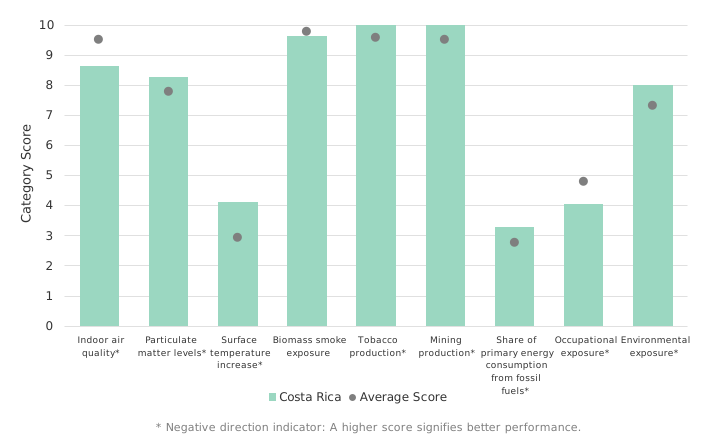
The score of 69.5 out of 100 reflects a contrasting health profile for COPD in Costa Rica. The country demonstrates exemplary strength in tobacco control policies, but faces critical weaknesses in diagnosis, integrated disease management, and control of environmental risk factors, which limit its overall performance. In the context of public policy, Costa Rica's greatest achievement is its robust General Law on Tobacco Control (No. 9028), which establishes 100% smoke-free spaces, prohibits advertising, and creates a specific tax that directly finances health services for associated diseases, including cessation. However, this strength contrasts with the notable absence of a unified national COPD strategy. There is no comprehensive clinical guide for the management of the pathology; Actions are fragmented and reactive, focused on the management of acute exacerbations rather than a preventive and standardized approach. The health system, based on the universal coverage of the CCSS and the EBAIS network, guarantees good general access. However, for COPD patients, the main barrier is a massive underdiagnosis of 88.7%. This problem originates in the limited availability of spirometry in primary care and the difficult access to consultations with specialists, identified as key gaps in the system. Although drugs are covered, prescribing patterns in the public sector show low use of internationally recommended combination therapies and high use of monotherapy, suggesting suboptimal disease management. With a prevalence of 9 cases per 100 people over the age of 40, COPD imposes a significant burden. The impact on the system is visible in hospitalizations: 23.8% of patients suffer at least one severe exacerbation that requires hospitalization or a visit to the emergency room within a period of 5 years. Mortality from respiratory diseases such as bronchopneumonia, for which COPD is a major risk factor, is among the leading causes of death in the country, especially in men and the elderly. The burden is aggravated by a high prevalence of comorbidities, mainly hypertension (58.3%) and diabetes (20.4%), which increase the risk of mortality. The environmental factor is a growing and underestimated challenge. Despite a 100% renewable electricity matrix, poor air quality is a critical risk, with an average exposure to PM2.5 particles of 14.3 μg/m³, almost triple that recommended by the WHO, affecting more than 88% of the population. The main source of this pollution is the transport sector's dependence on imported fossil fuels, compounded by lax and lax vehicle emission standards. In addition, climate change intensifies the health risks of outdoor workers due to heat stress and exposure to pollutants and agrochemicals.
Performance in each category
Provides further insights into scores across each Index category
Policy Context
Category score
78
7
/45 countries
Access and Care Coverage
Category score
60
40
/45 countries
Health System Characteristics
Category score
53
26
/45 countries

Disease Burden
Category score
82
4
/45 countries

Environmental Factors
Category score
73
16
/45 countries
Takeaways
Data from the COPD Index revealed the following key insights about severe asthma care in this country
Excellent tobacco control but no national COPD strategy Despite exemplary smoke-free legislation and cessation financing, Costa Rica lacks integrated clinical guidelines and a coordinated COPD strategy, resulting in reactive and inconsistent care.
Severe underdiagnosis and weak primary-care capacity An underdiagnosis rate of 88.7% reflects limited spirometry availability and restricted access to specialists, particularly outside urban areas, preventing early detection and effective management.
Environmental risks and treatment gaps worsen disease burden Widespread exposure to PM₂.₅, dependence on fossil-fuel transport, and uneven access to recommended combination therapies contribute to poorer outcomes, especially in rural communities.
Compare COPD Across Countries
Select different countries to see how they scored across each of the 5 categories and overall
Costa Rica
Costa Rica combines strong tobacco control legislation with universal health coverage, but its COPD response is hindered by extremely high underdiagnosis, limited access to spirometry and specialist care, and the absence of a unified national strategy or clinical guidelines. Growing environmental risks, suboptimal treatment patterns, and urban–rural disparities further undermine disease management and outcomes.
Policy Context
78
Access and Care Coverage
60
Health System Characteristics
53
Disease Burden
82
Environment
73
Index Score
69
/100
Rank
6
/45
Select country to compare

Romania
Romania’s strongest performance is in Access and Care Coverage, with broad availability of diagnostics, treatment, rehabilitation, and emerging telemedicine infrastructure, although inequalities and fragmentation limit their overall impact. Policy foundations, system integration, and disease burden challenges remain, driven by the absence of a national COPD strategy, high tobacco use, and comorbidities that continue to elevate risk.
Policy Context
58
Access and Care Coverage
76
Health System Characteristics
46
Disease Burden
59
Environment
68
Index Score
61
/100
Rank
35
/45
Peru
Peru has basic COPD guidelines and a clear understanding of local risk factors, but implementation is extremely limited, with more than 95% of cases undiagnosed and most patients lacking access to essential treatments. COPD in Peru is largely driven by poverty, biomass exposure, and tuberculosis history, while severe access barriers, weak infrastructure, and environmental risks leave the majority of patients without diagnosis or care.
Policy Context
44
Access and Care Coverage
55
Health System Characteristics
49
Disease Burden
86
Environment
65
Index Score
60
/100
Rank
36
/45

United Arab Emirates
The UAE reports good access to telemedicine and remote care, as well as strong conditions for digital therapeutics
Policy Context
33
Access and Care Coverage
72
Health System Characteristics
60
Disease Burden
78
Environment
63
Index Score
61
/100
Rank
33
/45

South Africa
South Africa has solid COPD clinical guidelines and national NCD commitments, with innovative primary-care tools like PACK supporting better practice, but gaps in tobacco control, rehabilitation access, and specialist capacity weaken overall implementation. Persistent inequities, limited reimbursement for key services, and high exposure to environmental and infectious risk factors continue to shape a challenging COPD landscape.
Policy Context
64
Access and Care Coverage
47
Health System Characteristics
32
Disease Burden
57
Environment
68
Index Score
53
/100
Rank
44
/45
India
India has tobacco control policies in place, and greater implementation and monitoring would further improve its overall score
Policy Context
42
Access and Care Coverage
61
Health System Characteristics
41
Disease Burden
62
Environment
44
Index Score
50
/100
Rank
45
/45

Israel
Israel performs well on COPD access, outcomes, and disease burden, supported by universal coverage and publicly funded services, although co-payments and capacity limits reduce full utilisation. Policy and system gaps persist, including the absence of a national COPD strategy, inconsistent guideline implementation, workforce shortages, and environmental risks that continue to influence COPD progression.
Policy Context
45
Access and Care Coverage
75
Health System Characteristics
56
Disease Burden
76
Environment
70
Index Score
64
/100
Rank
25
/45
Mexico
Mexico scores above average in the Policy Context category, with comprehensive clinical guidelines and tobacco control legislation, but implementation gaps limit real-world impact.
Policy Context
78
Access and Care Coverage
65
Health System Characteristics
53
Disease Burden
82
Environment
67
Index Score
69
/100
Rank
9
/45

Saudi Arabia
Saudi Arabia scores above average in the Policy Context category, with relatively good adherence to COPD care guidelines and tobacco control policies
Policy Context
66
Access and Care Coverage
68
Health System Characteristics
57
Disease Burden
87
Environment
61
Index Score
68
/100
Rank
13
/45

Cyprus
Cyprus performs very well in Access and Care Coverage under the GeSY system, which provides universal entitlements to diagnostics, specialist care, medicines, and rehabilitation while maintaining some of the lowest unmet healthcare needs in the EU. However, weak policy foundations, limited COPD-specific monitoring, high tobacco use, and recurring dust-related air pollution continue to constrain outcomes.
Policy Context
35
Access and Care Coverage
87
Health System Characteristics
50
Disease Burden
69
Environment
68
Index Score
62
/100
Rank
32
/45
Egypt
Egypt performs well on COPD disease burden, with comparatively low prevalence and mortality, but this likely reflects under-diagnosis, reporting gaps, and limited access to care rather than a truly low burden. Weak policy foundations, limited access to rehabilitation and cessation support, workforce shortages, and severe air-quality challenges continue to constrain Egypt’s capacity to manage COPD effectively.
Policy Context
36
Access and Care Coverage
56
Health System Characteristics
37
Disease Burden
83
Environment
58
Index Score
54
/100
Rank
42
/45

China
China scores relatively high in the Policy Context category due to a strong national COPD strategy.
Policy Context
75
Access and Care Coverage
51
Health System Characteristics
56
Disease Burden
54
Environment
34
Index Score
54
/100
Rank
43
/45

Colombia
Colombia has a strong regulatory and policy framework for COPD, supported by universal insurance coverage and updated clinical guidelines, but major gaps in implementation, diagnosis, and equitable access limit impact. Underdiagnosis, uneven distribution of specialists and rehabilitation services, and persistent environmental and socioeconomic risk factors continue to drive a substantial COPD burden across the country.
Policy Context
93
Access and Care Coverage
75
Health System Characteristics
49
Disease Burden
79
Environment
71
Index Score
73
/100
Rank
3
/45

Brazil
Relatively good conditions for access to telemedicine, but there remain significant gaps in access to and coverage for COPD diagnosis and care
Policy Context
54
Access and Care Coverage
64
Health System Characteristics
53
Disease Burden
77
Environment
69
Index Score
63
/100
Rank
27
/45
Costa Rica
Costa Rica combines strong tobacco control legislation with universal health coverage, but its COPD response is hindered by extremely high underdiagnosis, limited access to spirometry and specialist care, and the absence of a unified national strategy or clinical guidelines. Growing environmental risks, suboptimal treatment patterns, and urban–rural disparities further undermine disease management and outcomes.
Policy Context
78
Access and Care Coverage
60
Health System Characteristics
53
Disease Burden
82
Environment
73
Index Score
69
/100
Rank
6
/45

Chile
Chile has a strong regulatory and policy framework for COPD, supported by GES coverage, advanced tobacco control, and structured national programmes, which have contributed to declining mortality and smoking rates. However, major gaps persist in early diagnosis, treatment adherence, rehabilitation coverage, and equitable access, particularly in rural areas where spirometry, specialists, and rehabilitation services remain limited.
Policy Context
91
Access and Care Coverage
68
Health System Characteristics
60
Disease Burden
74
Environment
75
Index Score
74
/100
Rank
2
/45
Argentina
Argentina has strong epidemiological data and updated clinical guidelines for COPD, along with access to essential medicines and some leading rehabilitation centres, but system fragmentation and uneven implementation limit impact. High underdiagnosis, poor adherence, and significant environmental and socioeconomic risk factors continue to drive a substantial COPD burden across the country.
Policy Context
53
Access and Care Coverage
66
Health System Characteristics
50
Disease Burden
73
Environment
74
Index Score
63
/100
Rank
29
/45

United Kingdom
The United Kingdom (UK) is the second-highest scorer in the COPD Index, due in large part to its comprehensive implementation of strong tobacco control policies, and a relatively robust strategy for COPD prevention and care.
Policy Context
89
Access and Care Coverage
85
Health System Characteristics
49
Disease Burden
60
Environment
76
Index Score
72
/100
Rank
4
/45

Switzerland
Switzerland presents a slightly above-average score in the COPD Index, attributable to its high score in the Environmental Factors category and good performance in the Access and Care Coverage category.
Policy Context
61
Access and Care Coverage
72
Health System Characteristics
59
Disease Burden
67
Environment
74
Index Score
67
/100
Rank
14
/45

Sweden
Sweden presents the highest score in the Environmental Factors category and a strong Access and Care Coverage category, which contributes to Sweden’s position as the tenth highest-performing country in the COPD Index
Policy Context
55
Access and Care Coverage
75
Health System Characteristics
56
Disease Burden
59
Environment
84
Index Score
66
/100
Rank
21
/45

Spain
Spain is the third highest scorer in the Policy Context category, with strong care guidelines, a robust tobacco policy, and a national COPD strategy.
Policy Context
81
Access and Care Coverage
76
Health System Characteristics
63
Disease Burden
49
Environment
71
Index Score
68
/100
Rank
10
/45

Slovenia
Slovenia has relatively good access to treatment and drugs, good conditions for diagnosis, and robust universal health care service coverage.
Policy Context
39
Access and Care Coverage
68
Health System Characteristics
50
Disease Burden
70
Environment
69
Index Score
59
/100
Rank
38
/45

South Korea
South Korea is among the highest scorers in the Health System Characteristics category, with a low number of annual COPD hospitalizations and good conditions for health data collection and recording.
Policy Context
61
Access and Care Coverage
62
Health System Characteristics
65
Disease Burden
69
Environment
68
Index Score
65
/100
Rank
24
/45

Norway
Norway scores high in the Access and Care Coverage category, mainly due to good conditions for access to diagnosis, treatments, and drugs, as well as high universal health care coverage.
Policy Context
66
Access and Care Coverage
82
Health System Characteristics
47
Disease Burden
59
Environment
84
Index Score
68
/100
Rank
12
/45

Slovakia
Slovakia scores high in the Access and Care Coverage category, mainly due to high access to diagnostic and treatment services, and care referral pathways.
Policy Context
73
Access and Care Coverage
76
Health System Characteristics
55
Disease Burden
71
Environment
71
Index Score
69
/100
Rank
8
/45

Portugal
Portugal has the highest Health System Characteristics score, primarily due to low annual COPD hospitalisations, good conditions for health data collection and reporting, and the highest primary care physician density.
Policy Context
41
Access and Care Coverage
74
Health System Characteristics
70
Disease Burden
64
Environment
71
Index Score
64
/100
Rank
26
/45

Latvia
Latvia scores above average in the Environmental Factors category, with relatively low occupational exposure to COPD risk factors
Policy Context
32
Access and Care Coverage
58
Health System Characteristics
52
Disease Burden
68
Environment
71
Index Score
56
/100
Rank
41
/45

Poland
Poland has a low annual COPD hospitalisation rate, good conditions for health data collection and recording, and a high number of respiratory specialists.
Policy Context
36
Access and Care Coverage
62
Health System Characteristics
52
Disease Burden
70
Environment
67
Index Score
57
/100
Rank
39
/45

New Zealand
New Zealand has the strongest tobacco control policies in the COPD index
Policy Context
64
Access and Care Coverage
71
Health System Characteristics
48
Disease Burden
67
Environment
81
Index Score
66
/100
Rank
18
/45

Netherlands
The Netherlands’ score in the Access and Care Coverage category is high, with good conditions for access to treatment, drugs, and diagnosis
Policy Context
52
Access and Care Coverage
78
Health System Characteristics
54
Disease Burden
57
Environment
72
Index Score
63
/100
Rank
30
/45

Lithuania
Lithuania scores above average in the Health System Characteristics category, with a low number of annual COPD hospitalisations, good conditions for health data collection and reporting, and one of the highest numbers of respiratory specialists.
Policy Context
35
Access and Care Coverage
70
Health System Characteristics
56
Disease Burden
66
Environment
70
Index Score
59
/100
Rank
37
/45

Japan
Japan scores high in the Policy Context category due to strong adherence to COPD guidelines and a well-implemented national strategy
Policy Context
68
Access and Care Coverage
67
Health System Characteristics
55
Disease Burden
67
Environment
71
Index Score
66
/100
Rank
20
/45

Italy
Italy scores very high in Health System Characteristics, mainly due to a low number of annual COPD hospitalisations, a high number of respiratory specialists and good health data reporting. Italy would benefit from slightly more primary care physicians.
Policy Context
57
Access and Care Coverage
73
Health System Characteristics
66
Disease Burden
62
Environment
69
Index Score
65
/100
Rank
22
/45

Ireland
Policy Context
66
Access and Care Coverage
83
Health System Characteristics
45
Disease Burden
63
Environment
77
Index Score
67
/100
Rank
15
/45

Hungary
Hungary scores above average in the Access and Care Coverage category, with good conditions for diagnosis, treatment, and drug access, strong care referral pathways, and telemedicine access.
Policy Context
67
Access and Care Coverage
77
Health System Characteristics
55
Disease Burden
50
Environment
68
Index Score
63
/100
Rank
28
/45

Greece
Greece is among the top scorers in the Health System Characteristics category, with the highest number of respiratory specialists, good conditions for health data recording, and a low 365-day readmission for COPD.
Policy Context
66
Access and Care Coverage
71
Health System Characteristics
68
Disease Burden
62
Environment
73
Index Score
68
/100
Rank
11
/45

Germany
Germany scores above average in the Environmental Factors category, mainly due to good indoor air quality and low occupational exposure to COPD risk factors.
Policy Context
59
Access and Care Coverage
75
Health System Characteristics
53
Disease Burden
54
Environment
71
Index Score
62
/100
Rank
31
/45

France
France scores relatively high in the Health System Characteristics category, mainly due to high-quality health data reporting, an average number of respiratory specialists, and a slightly above-average density of primary care physicians.
Policy Context
51
Access and Care Coverage
78
Health System Characteristics
60
Disease Burden
63
Environment
74
Index Score
65
/100
Rank
23
/45

Finland
Finland has the third highest score in the Environmental Factors category, boasting the highest indoor air quality and the lowest level of environmental exposure to COPD risk factors.
Policy Context
81
Access and Care Coverage
75
Health System Characteristics
56
Disease Burden
63
Environment
80
Index Score
71
/100
Rank
5
/45

Estonia
Estonia is among the top overall scorers in the COPD Index, with strong tobacco control policies, COPD guidelines and practices, and a relatively strong COPD strategy.
Policy Context
78
Access and Care Coverage
70
Health System Characteristics
56
Disease Burden
70
Environment
72
Index Score
69
/100
Rank
7
/45

Denmark
Denmark has the highest score in the Access and Care Coverage category, primarily due to good diagnostic conditions, robust care referral pathways, and access to telemedicine.
Policy Context
73
Access and Care Coverage
84
Health System Characteristics
48
Disease Burden
51
Environment
77
Index Score
67
/100
Rank
16
/45

Czechia
Czechia has the 5th highest score in the Access and Care Coverage category, with good conditions for COPD diagnosis, universal health care coverage, and strong care referral pathways.
Policy Context
59
Access and Care Coverage
78
Health System Characteristics
42
Disease Burden
58
Environment
69
Index Score
61
/100
Rank
34
/45

Canada
Canada scores significantly above average in the Policy Context category, with strong tobacco control policies and relatively strong COPD care guidelines and practices.
Policy Context
66
Access and Care Coverage
71
Health System Characteristics
54
Disease Burden
66
Environment
74
Index Score
66
/100
Rank
17
/45

Belgium
Belgium’s has highly accessible universal health care coverage, treatment and drug access, however it has several gaps in care referral pathways and conditions for COPD diagnosis
Policy Context
34
Access and Care Coverage
61
Health System Characteristics
59
Disease Burden
60
Environment
73
Index Score
57
/100
Rank
40
/45

Austria
Access and Care Coverage in Austria is relatively high, due to strong conditions for COPD diagnosis, universal health care coverage, and telemedicine.
Policy Context
58
Access and Care Coverage
78
Health System Characteristics
57
Disease Burden
64
Environment
72
Index Score
66
/100
Rank
19
/45
Australia
Australia is the second highest scorer in the Policy Context category, due to the implementation of a comprehensive COPD strategy, care guidelines, and tobacco control laws.
Policy Context
87
Access and Care Coverage
80
Health System Characteristics
57
Disease Burden
67
Environment
76
Index Score
74
/100
Rank
1
/45
Select country to compare
Romania
Romania’s strongest performance is in Access and Care Coverage, with broad availability of diagnostics, treatment, rehabilitation, and emerging telemedicine infrastructure, although inequalities and fragmentation limit their overall impact. Policy foundations, system integration, and disease burden challenges remain, driven by the absence of a national COPD strategy, high tobacco use, and comorbidities that continue to elevate risk.
Policy Context
58
Access and Care Coverage
76
Health System Characteristics
46
Disease Burden
59
Environment
68
Index Score
61
/100
Rank
35
/45
Peru
Peru has basic COPD guidelines and a clear understanding of local risk factors, but implementation is extremely limited, with more than 95% of cases undiagnosed and most patients lacking access to essential treatments. COPD in Peru is largely driven by poverty, biomass exposure, and tuberculosis history, while severe access barriers, weak infrastructure, and environmental risks leave the majority of patients without diagnosis or care.
Policy Context
44
Access and Care Coverage
55
Health System Characteristics
49
Disease Burden
86
Environment
65
Index Score
60
/100
Rank
36
/45
United Arab Emirates
The UAE reports good access to telemedicine and remote care, as well as strong conditions for digital therapeutics
Policy Context
33
Access and Care Coverage
72
Health System Characteristics
60
Disease Burden
78
Environment
63
Index Score
61
/100
Rank
33
/45
South Africa
South Africa has solid COPD clinical guidelines and national NCD commitments, with innovative primary-care tools like PACK supporting better practice, but gaps in tobacco control, rehabilitation access, and specialist capacity weaken overall implementation. Persistent inequities, limited reimbursement for key services, and high exposure to environmental and infectious risk factors continue to shape a challenging COPD landscape.
Policy Context
64
Access and Care Coverage
47
Health System Characteristics
32
Disease Burden
57
Environment
68
Index Score
53
/100
Rank
44
/45
India
India has tobacco control policies in place, and greater implementation and monitoring would further improve its overall score
Policy Context
42
Access and Care Coverage
61
Health System Characteristics
41
Disease Burden
62
Environment
44
Index Score
50
/100
Rank
45
/45
Israel
Israel performs well on COPD access, outcomes, and disease burden, supported by universal coverage and publicly funded services, although co-payments and capacity limits reduce full utilisation. Policy and system gaps persist, including the absence of a national COPD strategy, inconsistent guideline implementation, workforce shortages, and environmental risks that continue to influence COPD progression.
Policy Context
45
Access and Care Coverage
75
Health System Characteristics
56
Disease Burden
76
Environment
70
Index Score
64
/100
Rank
25
/45
Mexico
Mexico scores above average in the Policy Context category, with comprehensive clinical guidelines and tobacco control legislation, but implementation gaps limit real-world impact.
Policy Context
78
Access and Care Coverage
65
Health System Characteristics
53
Disease Burden
82
Environment
67
Index Score
69
/100
Rank
9
/45
Saudi Arabia
Saudi Arabia scores above average in the Policy Context category, with relatively good adherence to COPD care guidelines and tobacco control policies
Policy Context
66
Access and Care Coverage
68
Health System Characteristics
57
Disease Burden
87
Environment
61
Index Score
68
/100
Rank
13
/45
Cyprus
Cyprus performs very well in Access and Care Coverage under the GeSY system, which provides universal entitlements to diagnostics, specialist care, medicines, and rehabilitation while maintaining some of the lowest unmet healthcare needs in the EU. However, weak policy foundations, limited COPD-specific monitoring, high tobacco use, and recurring dust-related air pollution continue to constrain outcomes.
Policy Context
35
Access and Care Coverage
87
Health System Characteristics
50
Disease Burden
69
Environment
68
Index Score
62
/100
Rank
32
/45
Egypt
Egypt performs well on COPD disease burden, with comparatively low prevalence and mortality, but this likely reflects under-diagnosis, reporting gaps, and limited access to care rather than a truly low burden. Weak policy foundations, limited access to rehabilitation and cessation support, workforce shortages, and severe air-quality challenges continue to constrain Egypt’s capacity to manage COPD effectively.
Policy Context
36
Access and Care Coverage
56
Health System Characteristics
37
Disease Burden
83
Environment
58
Index Score
54
/100
Rank
42
/45
China
China scores relatively high in the Policy Context category due to a strong national COPD strategy.
Policy Context
75
Access and Care Coverage
51
Health System Characteristics
56
Disease Burden
54
Environment
34
Index Score
54
/100
Rank
43
/45
Colombia
Colombia has a strong regulatory and policy framework for COPD, supported by universal insurance coverage and updated clinical guidelines, but major gaps in implementation, diagnosis, and equitable access limit impact. Underdiagnosis, uneven distribution of specialists and rehabilitation services, and persistent environmental and socioeconomic risk factors continue to drive a substantial COPD burden across the country.
Policy Context
93
Access and Care Coverage
75
Health System Characteristics
49
Disease Burden
79
Environment
71
Index Score
73
/100
Rank
3
/45
Brazil
Relatively good conditions for access to telemedicine, but there remain significant gaps in access to and coverage for COPD diagnosis and care
Policy Context
54
Access and Care Coverage
64
Health System Characteristics
53
Disease Burden
77
Environment
69
Index Score
63
/100
Rank
27
/45
Costa Rica
Costa Rica combines strong tobacco control legislation with universal health coverage, but its COPD response is hindered by extremely high underdiagnosis, limited access to spirometry and specialist care, and the absence of a unified national strategy or clinical guidelines. Growing environmental risks, suboptimal treatment patterns, and urban–rural disparities further undermine disease management and outcomes.
Policy Context
78
Access and Care Coverage
60
Health System Characteristics
53
Disease Burden
82
Environment
73
Index Score
69
/100
Rank
6
/45
Chile
Chile has a strong regulatory and policy framework for COPD, supported by GES coverage, advanced tobacco control, and structured national programmes, which have contributed to declining mortality and smoking rates. However, major gaps persist in early diagnosis, treatment adherence, rehabilitation coverage, and equitable access, particularly in rural areas where spirometry, specialists, and rehabilitation services remain limited.
Policy Context
91
Access and Care Coverage
68
Health System Characteristics
60
Disease Burden
74
Environment
75
Index Score
74
/100
Rank
2
/45
Argentina
Argentina has strong epidemiological data and updated clinical guidelines for COPD, along with access to essential medicines and some leading rehabilitation centres, but system fragmentation and uneven implementation limit impact. High underdiagnosis, poor adherence, and significant environmental and socioeconomic risk factors continue to drive a substantial COPD burden across the country.
Policy Context
53
Access and Care Coverage
66
Health System Characteristics
50
Disease Burden
73
Environment
74
Index Score
63
/100
Rank
29
/45
United Kingdom
The United Kingdom (UK) is the second-highest scorer in the COPD Index, due in large part to its comprehensive implementation of strong tobacco control policies, and a relatively robust strategy for COPD prevention and care.
Policy Context
89
Access and Care Coverage
85
Health System Characteristics
49
Disease Burden
60
Environment
76
Index Score
72
/100
Rank
4
/45
Switzerland
Switzerland presents a slightly above-average score in the COPD Index, attributable to its high score in the Environmental Factors category and good performance in the Access and Care Coverage category.
Policy Context
61
Access and Care Coverage
72
Health System Characteristics
59
Disease Burden
67
Environment
74
Index Score
67
/100
Rank
14
/45
Sweden
Sweden presents the highest score in the Environmental Factors category and a strong Access and Care Coverage category, which contributes to Sweden’s position as the tenth highest-performing country in the COPD Index
Policy Context
55
Access and Care Coverage
75
Health System Characteristics
56
Disease Burden
59
Environment
84
Index Score
66
/100
Rank
21
/45
Spain
Spain is the third highest scorer in the Policy Context category, with strong care guidelines, a robust tobacco policy, and a national COPD strategy.
Policy Context
81
Access and Care Coverage
76
Health System Characteristics
63
Disease Burden
49
Environment
71
Index Score
68
/100
Rank
10
/45
Slovenia
Slovenia has relatively good access to treatment and drugs, good conditions for diagnosis, and robust universal health care service coverage.
Policy Context
39
Access and Care Coverage
68
Health System Characteristics
50
Disease Burden
70
Environment
69
Index Score
59
/100
Rank
38
/45
South Korea
South Korea is among the highest scorers in the Health System Characteristics category, with a low number of annual COPD hospitalizations and good conditions for health data collection and recording.
Policy Context
61
Access and Care Coverage
62
Health System Characteristics
65
Disease Burden
69
Environment
68
Index Score
65
/100
Rank
24
/45
Norway
Norway scores high in the Access and Care Coverage category, mainly due to good conditions for access to diagnosis, treatments, and drugs, as well as high universal health care coverage.
Policy Context
66
Access and Care Coverage
82
Health System Characteristics
47
Disease Burden
59
Environment
84
Index Score
68
/100
Rank
12
/45
Slovakia
Slovakia scores high in the Access and Care Coverage category, mainly due to high access to diagnostic and treatment services, and care referral pathways.
Policy Context
73
Access and Care Coverage
76
Health System Characteristics
55
Disease Burden
71
Environment
71
Index Score
69
/100
Rank
8
/45
Portugal
Portugal has the highest Health System Characteristics score, primarily due to low annual COPD hospitalisations, good conditions for health data collection and reporting, and the highest primary care physician density.
Policy Context
41
Access and Care Coverage
74
Health System Characteristics
70
Disease Burden
64
Environment
71
Index Score
64
/100
Rank
26
/45
Latvia
Latvia scores above average in the Environmental Factors category, with relatively low occupational exposure to COPD risk factors
Policy Context
32
Access and Care Coverage
58
Health System Characteristics
52
Disease Burden
68
Environment
71
Index Score
56
/100
Rank
41
/45
Poland
Poland has a low annual COPD hospitalisation rate, good conditions for health data collection and recording, and a high number of respiratory specialists.
Policy Context
36
Access and Care Coverage
62
Health System Characteristics
52
Disease Burden
70
Environment
67
Index Score
57
/100
Rank
39
/45
New Zealand
New Zealand has the strongest tobacco control policies in the COPD index
Policy Context
64
Access and Care Coverage
71
Health System Characteristics
48
Disease Burden
67
Environment
81
Index Score
66
/100
Rank
18
/45
Netherlands
The Netherlands’ score in the Access and Care Coverage category is high, with good conditions for access to treatment, drugs, and diagnosis
Policy Context
52
Access and Care Coverage
78
Health System Characteristics
54
Disease Burden
57
Environment
72
Index Score
63
/100
Rank
30
/45
Lithuania
Lithuania scores above average in the Health System Characteristics category, with a low number of annual COPD hospitalisations, good conditions for health data collection and reporting, and one of the highest numbers of respiratory specialists.
Policy Context
35
Access and Care Coverage
70
Health System Characteristics
56
Disease Burden
66
Environment
70
Index Score
59
/100
Rank
37
/45
Japan
Japan scores high in the Policy Context category due to strong adherence to COPD guidelines and a well-implemented national strategy
Policy Context
68
Access and Care Coverage
67
Health System Characteristics
55
Disease Burden
67
Environment
71
Index Score
66
/100
Rank
20
/45
Italy
Italy scores very high in Health System Characteristics, mainly due to a low number of annual COPD hospitalisations, a high number of respiratory specialists and good health data reporting. Italy would benefit from slightly more primary care physicians.
Policy Context
57
Access and Care Coverage
73
Health System Characteristics
66
Disease Burden
62
Environment
69
Index Score
65
/100
Rank
22
/45
Ireland
Policy Context
66
Access and Care Coverage
83
Health System Characteristics
45
Disease Burden
63
Environment
77
Index Score
67
/100
Rank
15
/45
Hungary
Hungary scores above average in the Access and Care Coverage category, with good conditions for diagnosis, treatment, and drug access, strong care referral pathways, and telemedicine access.
Policy Context
67
Access and Care Coverage
77
Health System Characteristics
55
Disease Burden
50
Environment
68
Index Score
63
/100
Rank
28
/45
Greece
Greece is among the top scorers in the Health System Characteristics category, with the highest number of respiratory specialists, good conditions for health data recording, and a low 365-day readmission for COPD.
Policy Context
66
Access and Care Coverage
71
Health System Characteristics
68
Disease Burden
62
Environment
73
Index Score
68
/100
Rank
11
/45
Germany
Germany scores above average in the Environmental Factors category, mainly due to good indoor air quality and low occupational exposure to COPD risk factors.
Policy Context
59
Access and Care Coverage
75
Health System Characteristics
53
Disease Burden
54
Environment
71
Index Score
62
/100
Rank
31
/45
France
France scores relatively high in the Health System Characteristics category, mainly due to high-quality health data reporting, an average number of respiratory specialists, and a slightly above-average density of primary care physicians.
Policy Context
51
Access and Care Coverage
78
Health System Characteristics
60
Disease Burden
63
Environment
74
Index Score
65
/100
Rank
23
/45
Finland
Finland has the third highest score in the Environmental Factors category, boasting the highest indoor air quality and the lowest level of environmental exposure to COPD risk factors.
Policy Context
81
Access and Care Coverage
75
Health System Characteristics
56
Disease Burden
63
Environment
80
Index Score
71
/100
Rank
5
/45
Estonia
Estonia is among the top overall scorers in the COPD Index, with strong tobacco control policies, COPD guidelines and practices, and a relatively strong COPD strategy.
Policy Context
78
Access and Care Coverage
70
Health System Characteristics
56
Disease Burden
70
Environment
72
Index Score
69
/100
Rank
7
/45
Denmark
Denmark has the highest score in the Access and Care Coverage category, primarily due to good diagnostic conditions, robust care referral pathways, and access to telemedicine.
Policy Context
73
Access and Care Coverage
84
Health System Characteristics
48
Disease Burden
51
Environment
77
Index Score
67
/100
Rank
16
/45
Czechia
Czechia has the 5th highest score in the Access and Care Coverage category, with good conditions for COPD diagnosis, universal health care coverage, and strong care referral pathways.
Policy Context
59
Access and Care Coverage
78
Health System Characteristics
42
Disease Burden
58
Environment
69
Index Score
61
/100
Rank
34
/45
Canada
Canada scores significantly above average in the Policy Context category, with strong tobacco control policies and relatively strong COPD care guidelines and practices.
Policy Context
66
Access and Care Coverage
71
Health System Characteristics
54
Disease Burden
66
Environment
74
Index Score
66
/100
Rank
17
/45
Belgium
Belgium’s has highly accessible universal health care coverage, treatment and drug access, however it has several gaps in care referral pathways and conditions for COPD diagnosis
Policy Context
34
Access and Care Coverage
61
Health System Characteristics
59
Disease Burden
60
Environment
73
Index Score
57
/100
Rank
40
/45
Austria
Access and Care Coverage in Austria is relatively high, due to strong conditions for COPD diagnosis, universal health care coverage, and telemedicine.
Policy Context
58
Access and Care Coverage
78
Health System Characteristics
57
Disease Burden
64
Environment
72
Index Score
66
/100
Rank
19
/45
Australia
Australia is the second highest scorer in the Policy Context category, due to the implementation of a comprehensive COPD strategy, care guidelines, and tobacco control laws.
Policy Context
87
Access and Care Coverage
80
Health System Characteristics
57
Disease Burden
67
Environment
76
Index Score
74
/100
Rank
1
/45